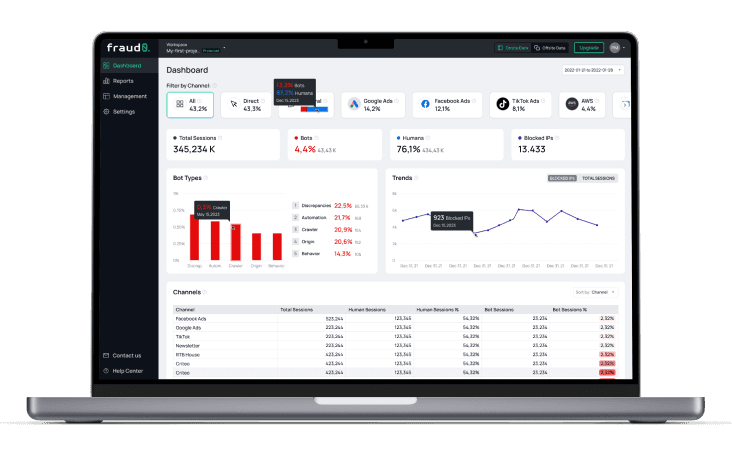
You paid for the clicks. Some of them were never real. A share of every ad budget goes to invalid traffic, the bots, fake users, and automated activity that consume spend without ever becoming a customer. Ad spend recovery is the process of getting wasted budget back, either by preventing future waste or by claiming credit for invalid clicks you were already charged for. In 2025, fraud0's Unmasking the Shadows report found that 21.3% of all onsite traffic was invalid (search-engine crawlers excluded), across 1.2 billion sessions. Recovering some of that spend is possible. However, it isn't automatic and it isn't guaranteed. This guide walks the full process end to end: what's recoverable, the steps a claim moves through, the evidence that strengthens it, and the outcomes you can realistically expect.
Key Takeaways
A Google Ads refund is evidence-based and process-driven, not automatic and never guaranteed. Outcomes depend on the invalid activity detected and on Google's own review.
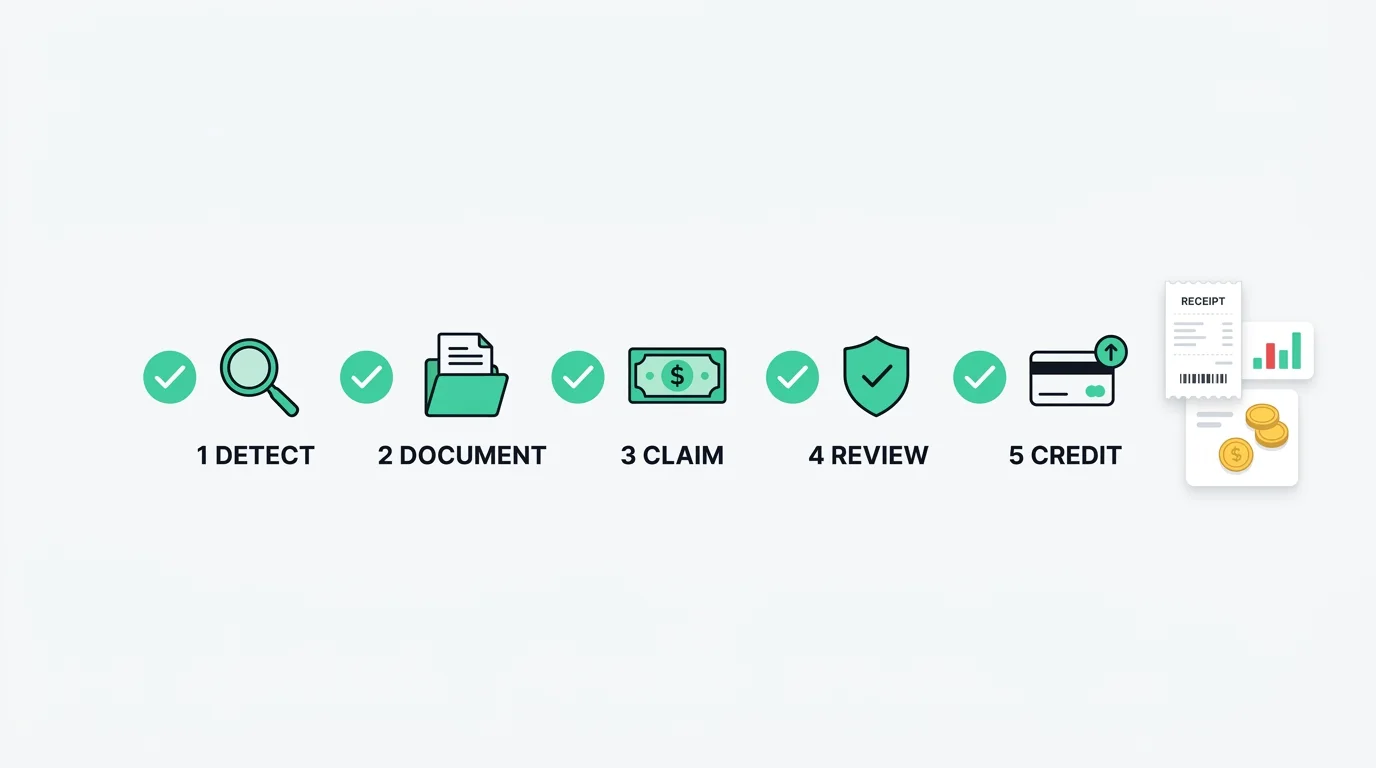
Recovery moves through five stages: detect, document, claim, review, credit. You can't skip the review, and the decision sits with the platform, not with you.
In 2025, fraud0's Unmasking the Shadows found 21.3% of onsite traffic invalid (search-engine crawlers excluded), so missed invalid activity is common enough to be worth pursuing.
Money almost always returns as account credit toward future spend, not cash back to your card.
Refunds aren't a fallback for failed prevention. A brand-new bot's first click can't be pre-blocked, so refunds stay a permanent part of recovery.
Let's set expectations before the steps. A refund for invalid traffic isn't a complaint you fire off when a campaign underperforms. Instead, it's a documented claim, reviewed against the platform's own standards, that may or may not result in a credit. We'll be honest about that throughout, because over-promising helps no one. For example, what we can show you is the real mechanism, the evidence that makes a claim reviewable, and where most advertisers leave money unrecovered. If you want the wider picture first, here's how to recover wasted ad budget across both prevention and refunds.
To ground the terms used throughout, here is the vocabulary this guide leans on:
Term | What it means |
|---|---|
Ad spend recovery | Getting wasted budget back through prevention or post-charge credit claims |
Invalid traffic (IVT) | Clicks and impressions from bots, scripts, or fake users that carry no business value |
Invalid-activity credit | An account adjustment Google applies when it agrees activity was invalid |
Ad fraud | The deliberate generation of invalid traffic to drain budgets or inflate metrics |
What can you actually get a refund for?
You can pursue recovery for invalid clicks you were charged for, the automated or fraudulent activity that filtering didn't catch before it hit your budget. In 2025, fraud0's Unmasking the Shadows report found 21.3% of onsite traffic invalid (search-engine crawlers excluded). So some of the clicks you were charged for were never real prospects.
The recoverable category is specific. Invalid traffic (IVT) is any click or impression that comes from bots, automated scripts, fake users, or other non-genuine sources that carry no business value. A click that converted poorly isn't invalid. A campaign that simply didn't perform isn't invalid either. Recovery targets activity that was never a real prospect in the first place, and the claim has to show that.
It helps to name the adversary too. Ad fraud is the deliberate generation of invalid traffic to drain advertiser budgets, inflate publisher metrics, or both. Not all invalid traffic is fraudulent, since some bots are simply automated tools. However, the share that is fraudulent is engineered specifically to look like genuine demand.
In 2025, fraud0's Unmasking the Shadows report analyzed 1.2 billion onsite sessions and 10.78 billion ad impressions and found 21.3% of onsite traffic invalid (search-engine crawlers excluded), and 9.75% of conversions invalid. Advertisers can pursue recovery for invalid clicks they were charged for, where the activity is detected and documented.
Here's the boundary that trips people up. Google Ads already filters a lot of invalid activity automatically and may credit some of it without you asking. An invalid-activity credit is the account adjustment Google applies when it agrees that clicks or impressions were invalid, reducing your future ad costs rather than refunding cash. A claim addresses what that automatic filtering missed, not what it already caught. The two routes recover different money, and conflating them is where advertisers either double-count or under-recover. We untangle that fully in our explainer on invalid-activity credits versus refunds.
So what can you actually recover? The recoverable amount is rarely your whole invalid-traffic rate. It's the slice that slipped past platform filtering, that you can actually evidence, and that survives review. Three filters narrow the headline figure down, so treat the 21.3% (search-engine crawlers excluded) as the size of the problem, not the size of your refund. The honest number is smaller, and it depends entirely on what you can document.
And invalid traffic is only one source. Billing errors, overdelivery past your budget, and ads served out-of-geo are recoverable too. The full picture is in ad-spend overbilling.
How does the Google Ads refund process work?
A Google Ads refund follows a defined process, not a quick complaint. According to Google Ads Help, if you believe you were charged for invalid clicks that automatic filtering missed, you can submit an invalid-clicks inquiry to Google's ad traffic quality team, which investigates and may issue additional credit. In 2025, fraud0's Unmasking the Shadows report found 21.3% of onsite traffic invalid (search-engine crawlers excluded), so the basis for an inquiry is often present.
The mechanism has a clear logic. First, you identify the suspected invalid activity. Then you back it with evidence, and you submit it through Google's defined channel. Google, in turn, reviews it against its own criteria, on its own timeline, and decides. There's no shortcut around that review. Importantly, there's no version of this where a credit lands purely because you asked.
According to Google Ads Help, advertisers who believe they were charged for invalid clicks that automatic filtering missed can submit an invalid-clicks inquiry to Google's ad traffic quality team. The team investigates and may issue additional credit where it agrees. The route is advertiser-initiated and evidence-driven, and the outcome depends on Google's review.
We're deliberately not inventing timeframes, success rates, or dollar amounts here, because those vary by account and aren't ours to promise. What's reliable is the shape of the process. The next section breaks it into the five stages every claim actually moves through.
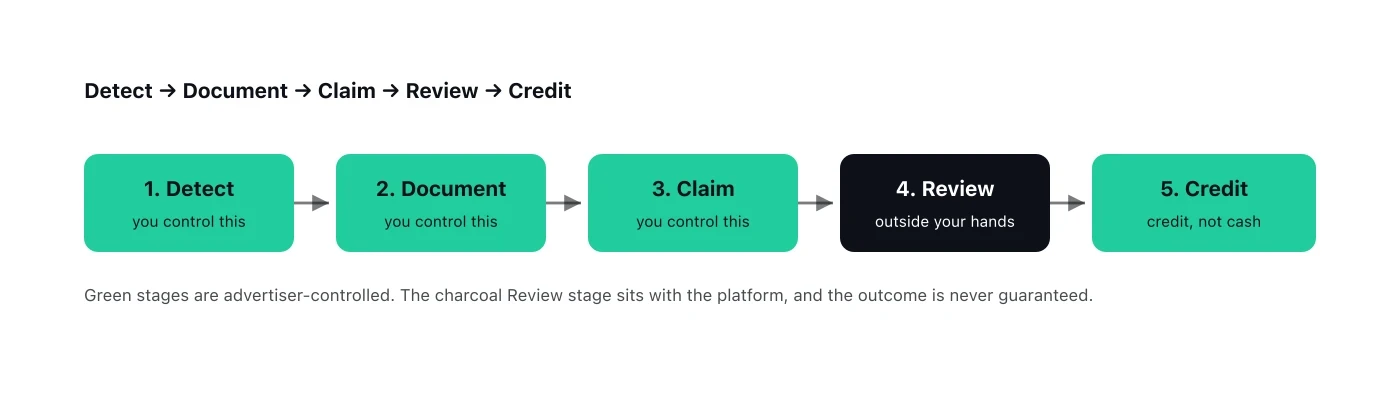
Source: Process per Google Ads Help; staging and framing by fraud0.
What are the five steps to recover wasted Google Ads spend?
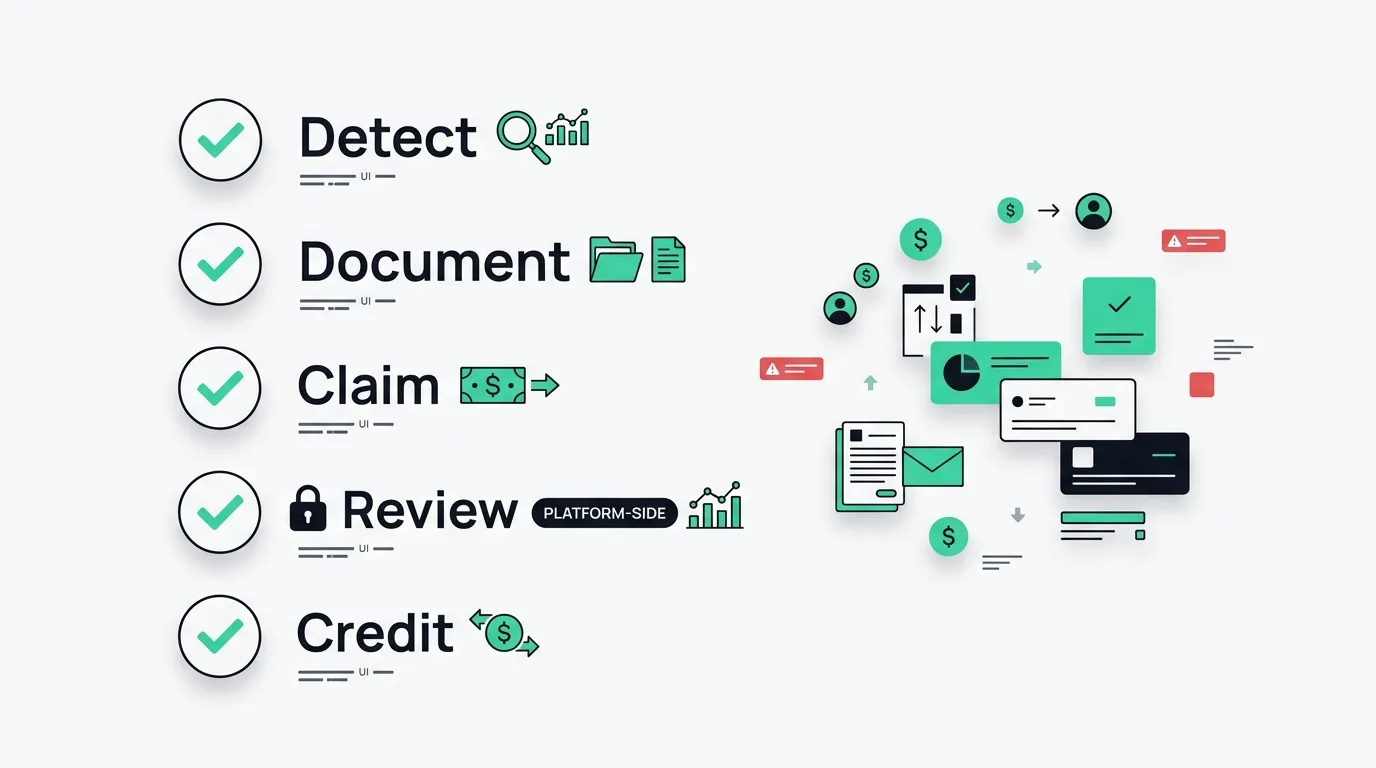
Recovery moves through five realistic stages, and none of them can be skipped. In 2025, fraud0's Unmasking the Shadows report found 21.3% of onsite traffic invalid (search-engine crawlers excluded), so the invalid clicks you were charged for are usually there to document. Turning that into recovered budget is a sequence: detect, document, claim, review, and credit. So what does each stage actually involve?
Step 1: Detect the invalid activity
You can't claim what you haven't found. Detection is the starting point, and it's where onsite, first-party measurement earns its place. Google's own filtering works at the platform level, judging the click. However, it doesn't observe what a visitor does after landing on your site. Onsite detection, by contrast, watches that next step. For example, it captures the page views, the session length, and the behavioral signals that separate a bot from a buyer, recorded as the activity happens.
Step 2: Document what you found
Detection on its own isn't a claim. You also need a record showing what the invalid activity was, when it occurred, and how it was identified. The strongest documentation is logged in real time, with the attributes that distinguish automated activity from a genuine visit, rather than reconstructed weeks later from a platform report. The evidence deep dive lives in our guide to document invalid traffic as refund evidence.
Step 3: File the claim
With evidence in hand, you submit through Google's defined channel, not an informal email. According to Google Ads Help, advertisers can submit suspected invalid clicks to the ad traffic quality team for investigation. The claim ties the documented invalid activity to the spend you're asking Google to reconsider, so a clear, specific submission gives the review something concrete to assess.
Step 4: Platform review
This is the stage outside your control, and it's exactly why we never guarantee outcomes. Google evaluates your submission against its own standards, on its own timeline. A well-documented claim gives the review something real to weigh. In our experience supporting these claims, Google often comes back with follow-up questions and asks for additional data, so expect a back-and-forth and be ready to supply more evidence. However, the decision rests with the platform, not with you and not with us. Some claims succeed. Some don't. That uncertainty is honest, not a flaw in your evidence.
Step 5: The credit
Where Google agrees, it issues an adjustment. According to Google Ads Help, invalid-activity adjustments are applied as credit toward your account, reducing future ad costs rather than returning cash to your card. In our experience supporting these claims, setting that expectation early is what keeps the process honest. For example, stakeholders who expect a cheque feel let down by a credit, even when the credit is a genuine win. The recovery is real. It just shows up as lower future media cost.
According to Google Ads Help, advertisers detect and submit suspected invalid clicks to Google's ad traffic quality team, which reviews the claim and, where it agrees, applies credit toward the account. The process runs detect, document, claim, review, credit. The review sits with Google, outcomes aren't guaranteed, and money typically returns as account credit toward future spend.
What evidence strengthens a refund claim?
Evidence is the difference between a claim that's reviewed seriously and one that isn't. After all, a platform can't act on a hunch. In 2024, Imperva's Bad Bot Report (Imperva, 2024 Bad Bot Report) found that automated bots made up 51% of all web traffic, the first year they overtook humans. When more than half the web isn't human, distinguishing a bot from a buyer with logged detail is what makes a claim reviewable.
Strong claims share a pattern: the invalid activity was captured onsite, in real time, with the behavioral attributes that mark it as non-genuine. fraud0's data shows what that pattern looks like in aggregate. For example, in 2025, Unmasking the Shadows found invalid users averaged just 1.2 page views and 26-second sessions, versus 181 seconds overall. That's an aggregate finding across 1.2 billion sessions, not a per-session threshold to hunt for, but it shows the behavioral gap that's invisible to platform-side filtering and clear onsite. As a result, it's the raw material a documented claim is built from.
From our work supporting recovery claims, we found the cases that hold up share one trait: the activity was logged when it happened, not reconstructed later. For instance, a timestamped record of the invalid behavior, tied to the clicks you were charged for, gives a review something concrete to evaluate instead of an after-the-fact suspicion. Weak claims are the ones that say "performance felt off." Strong claims, by contrast, say "here is the activity, here is when it happened, here is why it wasn't real."
In 2024, Imperva's Bad Bot Report found automated bots made up 51% of all web traffic. fraud0's Unmasking the Shadows found that, in aggregate, invalid users are far less engaged than real ones. Real-time, onsite documentation of that behavioral gap is what makes an invalid-clicks claim reviewable rather than speculative.
We keep the full evidence playbook in a dedicated guide, because capturing the right attributes well is its own skill. Start with document invalid traffic as refund evidence when you're ready to build a record a review can actually assess.
What should you realistically expect from a refund?
Expect a process with an uncertain outcome, not a guaranteed payout. In 2025, fraud0's Unmasking the Shadows report found invalid traffic ranged from 20.6% on Paid Social to 7.0% on Paid Search, so how much is even in play depends heavily on where you spend. Your recoverable amount depends on your detected invalid activity, your evidence, and Google's review.
Three honest caveats matter here. First, not every account has a large recoverable balance beyond what automatic filtering already credited. Second, not every claim succeeds, even a well-documented one. Third, the review sits entirely outside your control. Nevertheless, none of that means recovery isn't worth pursuing. It means going in with accurate expectations rather than a promise of a cheque.
The most common mistake isn't filing a weak claim. Instead, it's assuming the automatic invalid-activity credit Google already applied is the whole story. That credit reflects what Google's systems caught at the click. However, the activity that only reveals itself onsite, after the visitor arrives, sits outside that number by definition. Advertisers who never look onsite cap their recovery at the platform's own vantage point and quietly leave the rest unrecovered.
And remember the form it comes back in. According to Google Ads Help, invalid-activity adjustments are applied as credit toward your account, not cash to your card. In other words, a credit lowers next month's media cost. It doesn't top up the bank. For your books and your cash flow, that's a meaningful distinction, even though both are genuine recovery.
Do refunds replace prevention, or work alongside it?
Refunds and prevention aren't alternatives. Rather, they're two halves of recovery that run together. In 2025, fraud0's Unmasking the Shadows report found 21.2% of in-ad impressions invalid alongside the 21.3% onsite figure (search-engine crawlers excluded). Waste shows up on both sides of the click. Prevention reduces tomorrow's leak. Refunds, meanwhile, recover what already slipped through.
So why can't you pick just one? Prevention through detection and exclusion cuts the activity you've already seen, so known sources stop draining spend. However, a brand-new bot has no history to match against, so its first click can't be pre-blocked. Some invalid traffic always gets through, which is exactly why refunds stay a permanent part of recovery, not a fallback for when prevention "fails." Nothing failed. The residual is structural.
In 2025, fraud0's Unmasking the Shadows report found 21.2% of in-ad impressions invalid and 21.3% of onsite traffic invalid after standard filtering (search-engine crawlers excluded). Detection reduces future waste by excluding known sources, but a new bot's first click can't be pre-blocked, so refunds remain an essential, permanent part of ad-spend recovery rather than a fallback.
So the same onsite detection that builds your refund evidence also feeds the exclusions that cut future waste. In short, one capability, two jobs. If choosing a protection tool is your next question, our click fraud protection buyer's guide covers what genuine detection looks like versus IP-blocking with a dashboard.
What does recovery look like in practice?
Recovery isn't theoretical. Real advertisers run the process and see measurable change. For example, consumer-health brand Uriach worked with fraud0 to clean up its campaigns and secure ad refunds, combining prevention and recovery into one program. Where invalid activity was detected and documented, evidence supported the recovery process. The point isn't to promise the same result, because outcomes depend on the invalid activity present and the platform's review.
What a real case shows that a how-to can't is the sequence holding together end to end: detect, exclude, document, recover. The evidence we built for the refund was the same detection that cut future waste. That's the pattern we see repeatedly. Recovery works best when the two arcs share one detection layer rather than bolting a refund process on after the fact.
Read the full story in our how Uriach recovered wasted spend, including how the campaigns were cleaned up and what the recovery process looked like. Additionally, if you manage budgets for clients rather than your own, the dynamics shift, and our guide to ad-spend recovery for agencies covers running this across a portfolio.
How do you start recovering wasted Google Ads spend?
Start by making the invalid traffic visible, because you can't claim what you can't see. In 2025, fraud0's Unmasking the Shadows report found 21.3% of onsite traffic invalid (search-engine crawlers excluded) across 1.2 billion sessions. Yet most of that waste never appears on a standard dashboard. Therefore, first-party, onsite detection is the entry point to the whole process.
From there the path is the five steps: detect the invalid activity, document it in real time, file the claim through Google's channel, accept the review, and treat the credit as recovered media cost. A reality check, though. The first move isn't a refund request. Instead, it's measurement. Find out how much of your traffic is actually invalid, then decide whether a claim is worth building.
This is the gap fraud0 was built to close. We surface the invalid activity platform filtering leaves behind through onsite, first-party detection, then support evidence-based recovery where it's found. The onsite detection that builds your claim is the same detection that cuts future waste, so you're never choosing between prevention and refunds. There are no guarantees on Google's decision, just clarity on what's actually invalid and a documented path to act on it. So if you suspect you're paying for traffic that can't convert, the honest next step is to look.