Key takeaways
ChatGPT ads are a genuine new opportunity, high-intent and worth testing.
On a channel this new, the edge goes to advertisers who can tell real traffic from bots, not just the first to show up.
Platform-reported numbers cannot be verified yet, so the reliable read on quality is what visitors actually do on your own site.
Measure traffic quality from day one: scale what's real, cut what isn't. That's how a new channel actually pays off.
ChatGPT ads are real, and they are new. OpenAI began testing ads inside ChatGPT in early 2026, and by mid-2026 any US advertiser could buy them through a self-serve Ads Manager, with the channel expanding to more countries since. It is a genuinely new place to spend, and that is exactly why it deserves a careful eye. A brand-new channel has no history to benchmark against, no established sense of what clean traffic looks like, and reported numbers you cannot yet independently check. The smart move is not to avoid it. It is to evaluate the traffic you get from it, from the very first click, before you scale.
What are ChatGPT ads?
As of late 2026, ChatGPT ads appear in two main ways: sponsored results in ChatGPT's search experience and conversational ads inside chat threads. They show up as clearly labeled "Sponsored" boxes below an answer, often as product cards with a brand logo, price, stock status, and a delivery estimate. OpenAI says ads do not influence the answers themselves.
Targeting is contextual. Instead of keywords or cross-web tracking, ads are matched to the topic of the conversation, prior chats, and earlier ad interactions. Advertisers buy through the self-serve OpenAI Ads Manager on a CPC or CPM basis with no minimum spend. Reported prices cluster around $3 to $5 per click and roughly $25 to $60 per thousand impressions. It is a premium, high-intent channel, so every wasted click or impression costs more than it would on cheaper inventory.
Why a brand-new channel is a blind spot
Every mature channel gives you something a new one cannot: a baseline. On Google or Meta you have years of your own data, industry benchmarks, and a rough sense of what normal engagement, bounce, and conversion look like. When something is off, you notice.
A channel that launched this year gives you none of that. You cannot yet tell a strong result from an inflated one, because there is nothing to compare it to. Reported clicks and impressions come from the platform, and early on you have no independent way to check them. And invalid traffic tends to concentrate where scrutiny is lowest, which, by definition, is a channel nobody has learned to watch yet. In our own work across channels, new traffic sources tend to attract invalid and low-quality visits before there is any benchmark to catch them.
AI traffic is rising everywhere
This matters more now because the background rate of automated traffic is climbing.
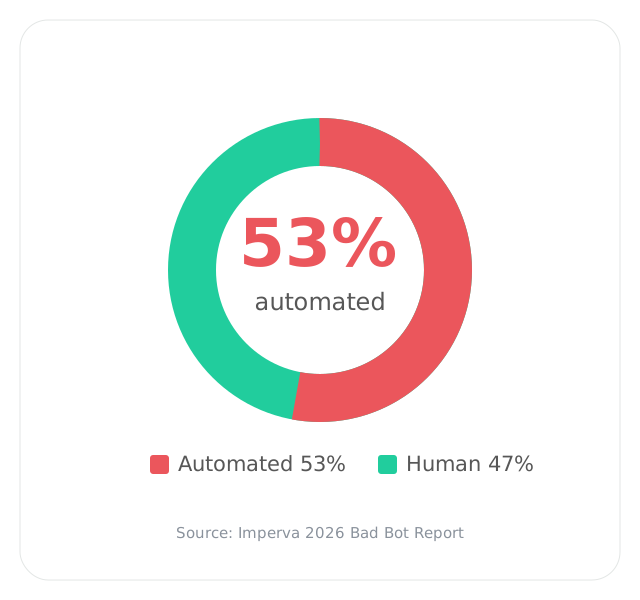
Automated traffic reached 53% of all web traffic in 2025, and human traffic fell below half, to 47%, for the first time (Imperva 2026 Bad Bot Report). AI crawlers and agents are a growing, often unidentified, part of that mix. A new AI-native ad channel sits right in the middle of that current. None of this means ChatGPT ads are fraudulent. There is no evidence of that. It means the environment every new channel launches into is noisier than it was a few years ago, so the benefit of the doubt should be earned, not assumed.
The first measurements are already in
You do not have to take this on faith. Some of the first observations of ChatGPT-ads traffic are already in. Ad-fraud researcher Dr. Augustine Fou recently pointed to an early analysis by Andy Brice, which found low engagement and a 0.46% conversion rate from ChatGPT paid ads, well below Google Ads at around 5%. The takeaway was that the traffic looked low-value rather than bot-driven. It is one early look, not a verdict on the channel, but it makes the point exactly: on a new channel, the signals that matter are behavioral, time on page, real interactions, and conversions that stick, not the click counts the platform reports back.
What to watch on a channel this new
Three things make ChatGPT ads worth extra care, not because of anything specific to OpenAI, but because of what any new, high-CPC channel invites:
Cost. At a few dollars a click, invalid or low-quality traffic burns budget faster than it would on cheap inventory.
Novel targeting. Contextual, conversation-based matching is new territory, and new mechanics take time to prove out.
No fraud baseline. There is no established sense of what invalid traffic looks like here yet, so you cannot lean on the platform or the industry to flag it for you.
How to evaluate ChatGPT-ads traffic from day one
Treat it like any unproven channel: small, measured, and verified before you scale.
Measure onsite, not just in the platform. The most reliable read on traffic quality is what visitors actually do on your own site, not what the ad platform reports back to you. See how to detect invalid traffic in your analytics.
Watch the behavioral tells. Sessions that bounce in a second or two, near-zero page depth, and "conversions" that never turn into real customers are the signals that a channel is sending traffic that is not real.
Compare, don't assume. Hold the new channel to the same quality bar as your proven ones. If its engaged traffic behaves nothing like a real user, that is your answer. Here is what invalid traffic is and how it shows up.
Scale what you verify. Start with a controlled budget, confirm the traffic is real, and only then increase spend. If you find you were charged for invalid clicks, there are ways to recover wasted ad spend.
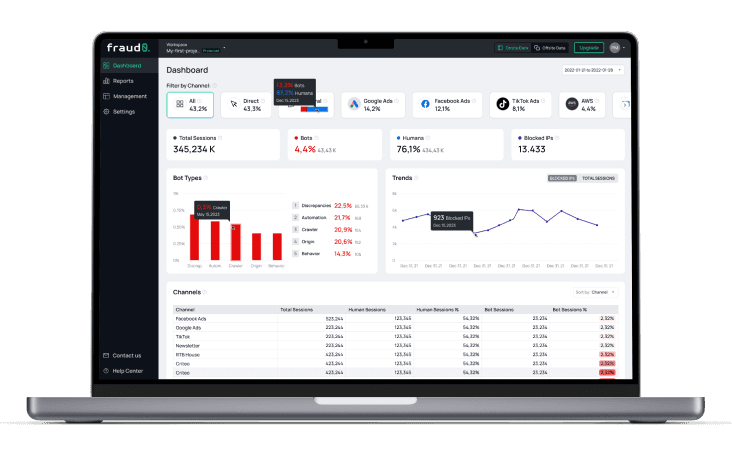
fraud0 measures invalid traffic directly on your site, across every channel, so a brand-new source like ChatGPT ads gets the same scrutiny as Google or Meta from the first click, no track record required.
The bottom line
New channels are where budgets get tested, and where invalid traffic hides the longest, precisely because no one has a baseline yet. ChatGPT ads are worth exploring. They are also worth watching. Before you scale, see how much of the traffic is actually real, on ChatGPT ads and everywhere else.