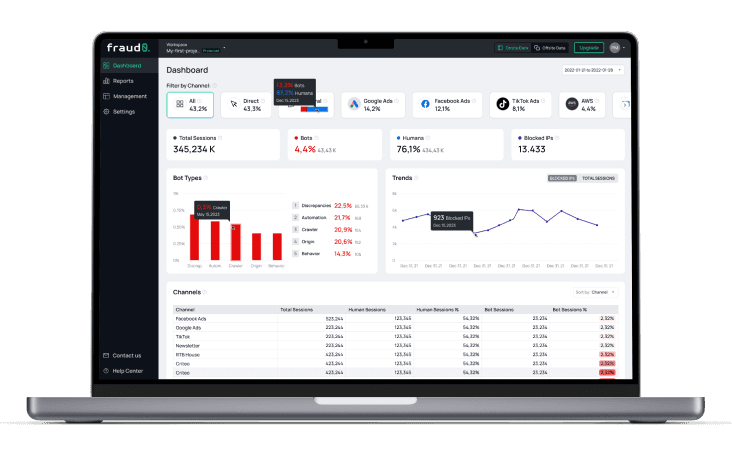
Most refund conversations start and end with invalid traffic. That's the biggest hidden leak, but it isn't the only one. Ad-spend overbilling is any charge you shouldn't have paid in full: invalid clicks that filtering missed, a double charge or wrong amount, spend that ran past the budget you set, or budget spent on inventory you never targeted. In 2025, fraud0's Unmasking the Shadows report found 21.3% of all onsite traffic was invalid (search-engine crawlers excluded) across 1.2 billion sessions, so invalid traffic is the headline. But look at the billing line by line and other overcharges surface too. This guide is built around Google Ads, where the mechanisms and the recovery routes are best documented, and it shows you what to look for and how to claim it back.
Key Takeaways
Overbilling is broader than invalid traffic. It also covers billing errors (double charges, wrong amounts), overdelivery (charged past your budget), and campaign violations (ads served out-of-geo or on placements you didn't target).
A high invalid-traffic rate is not proof of overbilling by itself. The 21.3% figure is a share of traffic, not spend you were definitely charged for. The recoverable slice is the invalid clicks you were actually billed for.
Overdelivery is a documented Google mechanism, not a mistake to be angry about. Google can serve past your average daily budget, but won't charge above your monthly limit, and applies an overdelivery credit when it does.
Recovery is evidence-based and never guaranteed, and money comes back as account credit, not cash.
fraud0's Onsite detection and ad-account audit surface where overbilling hides. For Google Ads, fraud0 can also automate the claim process end to end.
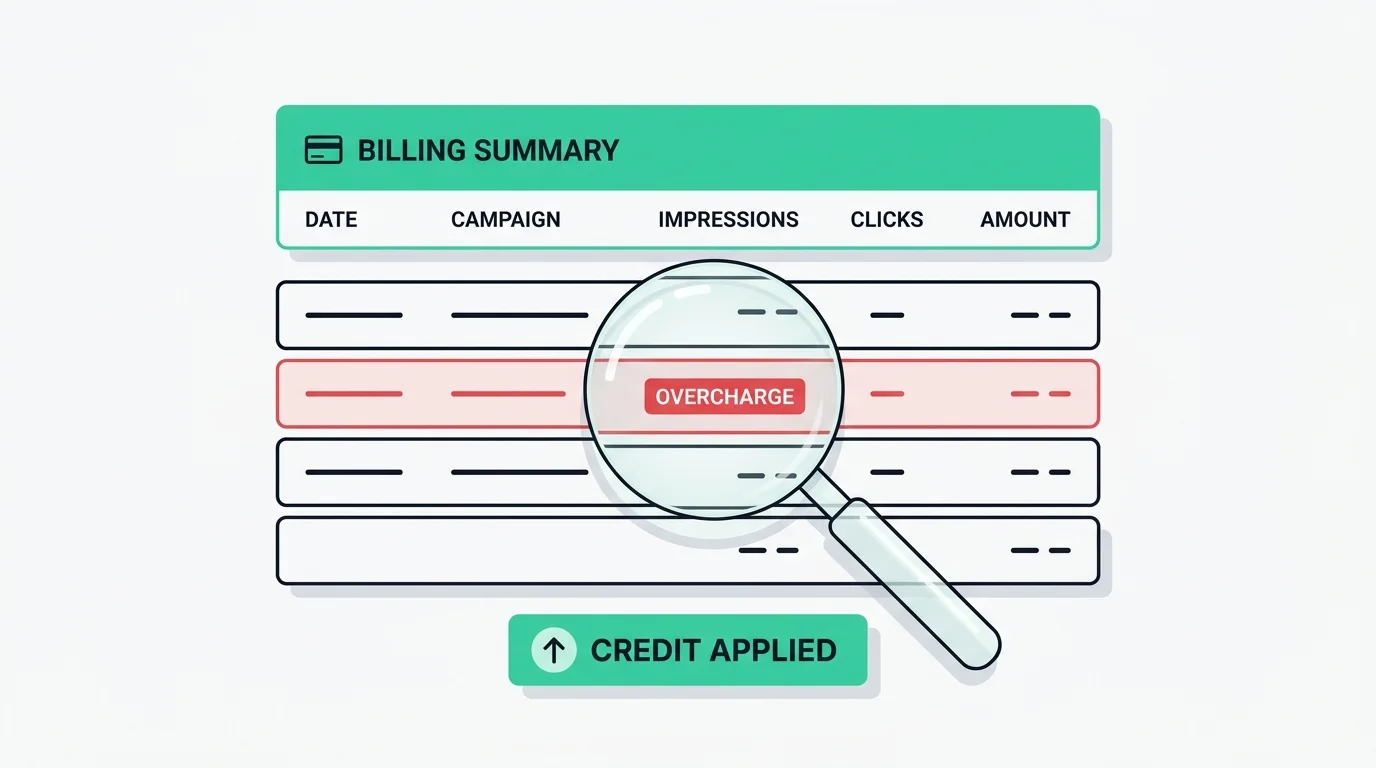
Before the detail, one honest framing. Overbilling doesn't mean a platform is cheating you. Most of it is the ordinary friction of automated auction systems: filtering that can't catch everything, delivery that overshoots, and targeting that leaks at the edges. The money is still yours to reclaim where you can evidence it. If you want the wider picture across both prevention and refunds first, here's how to recover wasted ad budget as a whole.
What counts as ad-spend overbilling?
Ad-spend overbilling is any spend that shouldn't have been charged to you in full, whatever the cause. It's a useful umbrella because the recovery mindset is the same across all four sources: find it, evidence it, and claim it through Google's process. Grouping them stops you from fixating on invalid traffic and quietly leaving the other three unrecovered.
Here are the four sources this guide works through:
Source | What it is | How it's usually recovered |
|---|---|---|
Invalid traffic | Clicks you were charged for from bots, scripts, or fake users | Invalid-clicks inquiry to Google |
Billing errors | Double charges, wrong amounts, currency or tax mistakes | Billing correction / adjustment |
Overdelivery | Cost served past your budget | Automatic overdelivery credit |
Campaign violations | Spend on out-of-geo or non-targeted placements | Evidence-based claim |
The first, invalid traffic, has the deepest playbook and its own guides, so we cover it briefly here and link out. The other three get most of the attention below, because they're the ones most advertisers never audit.
Are you being charged for invalid traffic?
Invalid traffic is the largest source of overbilling, but the number that gets quoted needs a careful read. In 2025, fraud0's Unmasking the Shadows report found 21.3% of onsite traffic invalid (search-engine crawlers excluded). That's a share of traffic, though, not a claim that 21.3% of your spend was billed for invalid activity. Much of that traffic sits on unpaid channels, and reaching your site only tells you it slipped platform pre-click filters. The recoverable slice is narrower: the invalid clicks you were actually charged for.
That distinction matters for two reasons. First, it keeps your claim honest and reviewable, because you're pointing at billed clicks, not a headline percentage. Second, it sets a realistic recovery figure, which is always smaller than the invalid-traffic rate.
In 2025, fraud0's Unmasking the Shadows report analyzed 1.2 billion onsite sessions and found 21.3% of onsite traffic invalid (search-engine crawlers excluded). Invalid traffic is the largest source of ad-spend overbilling, but the recoverable amount is the invalid clicks an advertiser was billed for, not the headline rate.
The full mechanics, the detect-document-claim-review-credit flow, live in our ad-spend refund guide. For the difference between the credit Google applies automatically and a claim you file, see invalid-activity credits versus refunds. This article assumes you know invalid traffic is recoverable and turns to the three sources those guides don't cover.
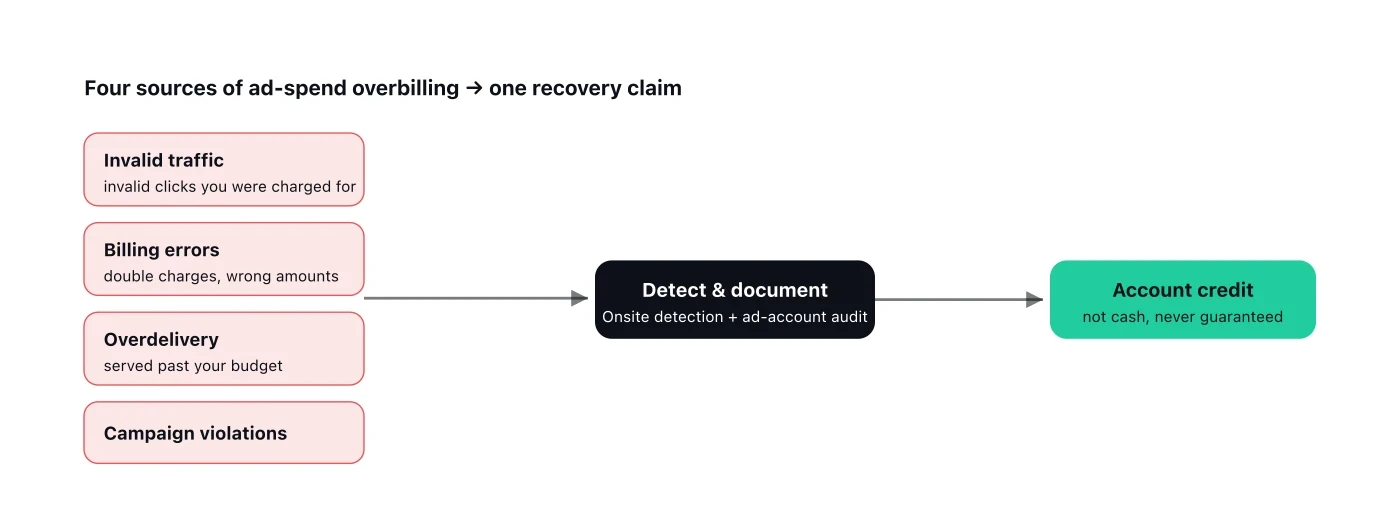
The four sources feed one recovery workflow. Framing by fraud0; recovery routes per Google Ads Help.
How do you spot billing errors like double charges?
Billing errors are the most literal form of overbilling: a charge posted twice, an amount that doesn't match what ran, or a currency or tax line that's off. They're rarer than invalid traffic, but they're also the clearest to prove, because the discrepancy sits right there in your billing records.
Spotting them is a reconciliation habit, not a detection problem. Compare what you were billed against what actually served, month by month. According to Google Ads Help, you can review every credit and adjustment applied to your account under the Billing summary, which is also where a correction shows up once it's made. If a charge doesn't reconcile, you raise it with Google's billing support with the invoice and the discrepancy attached.
The honest note here: in the accounts we audit, most won't find a double charge every month, and you shouldn't go looking for villainy. However, at scale, across many campaigns and long time windows, small billing discrepancies do occur, and they're worth catching because the evidence is unambiguous.
What is overdelivery, and when does it overbill you?
Overdelivery is when Google serves your ads past your average daily budget on a given day. On its own, that isn't overbilling. According to Google Ads Help, Google can spend up to twice your average daily budget on a high-traffic day, then balances it out so you're not charged more than your monthly limit, which is your average daily budget multiplied by 30.4 days.
Overbilling only happens when the served cost pushes you above that monthly limit. When it does, Google applies an overdelivery credit automatically. According to Google Ads Help, those adjustments appear in your Billing summary. So the recovery here is mostly a verification job: confirm the credit actually landed.
The practical check is simple. Compare your served cost against your billed cost for the period. If served cost exceeded your monthly limit and you don't see a matching credit, that's the gap to raise. This is the one source of overbilling that's usually self-correcting, but "usually" is why you still look.
Are your ads being served where they shouldn't?
This is the source most advertisers never audit, and it's where campaign violations turn into real overbilling. You set a campaign to target one country and one set of placements. In practice, spend leaks: clicks arrive from geographies you never targeted, or your ads run on placements that don't belong in the plan. You paid for inventory that was never in scope.
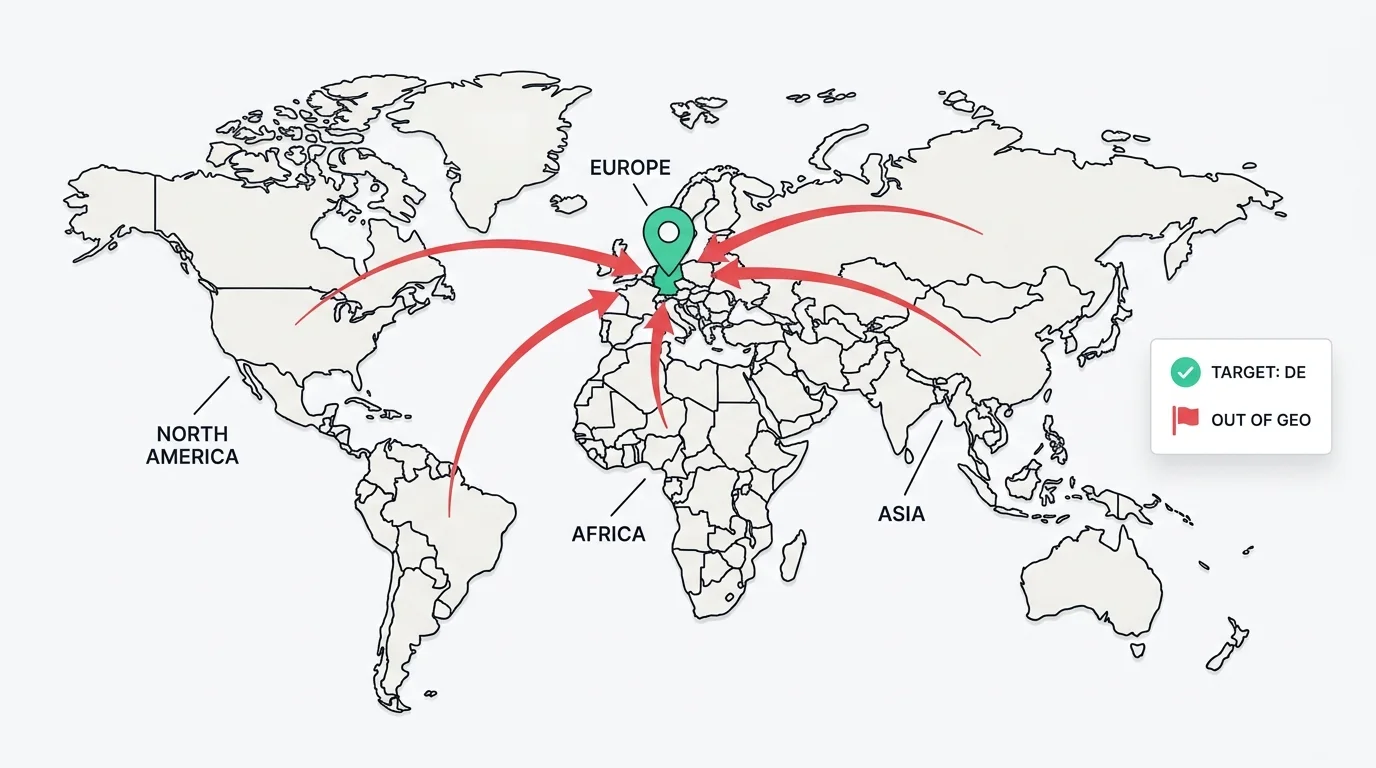
This is exactly where Onsite, first-party data changes what you can see. Google's own reporting tells you where it thinks it served. Onsite detection tells you where the traffic actually came from. If a campaign is set to Germany only and Onsite detection shows a wave of sessions originating in, say, India, that mismatch is a documented signal that spend went somewhere it shouldn't. Referrer data works the same way for placements, showing the sources actually sending traffic, so you can compare them against what you targeted.
A campaign violation is spend on inventory you didn't target: out-of-geo traffic or non-targeted placements. Platform reporting shows intended serving; Onsite, first-party detection shows where traffic actually originated. A mismatch, such as traffic from a country outside your targeting, is the documented basis for questioning the spend.
None of this is about accusing a platform of bad faith. Targeting leaks are a known edge of large auction systems. But leaked spend is still recoverable spend when you can show, with first-party evidence, that it fell outside what you set up and paid for.
How does fraud0 surface overbilling?
fraud0 was built to make invisible waste visible, and overbilling is a large part of it. Two capabilities do the work. The first is Onsite detection: first-party measurement that watches what each visitor actually does after the click, running 2,000+ real-time checks per visit to separate a genuine buyer from a bot, and recording where that traffic really came from. That's the same detection that surfaces invalid clicks, out-of-geo traffic, and questionable placements.
The second is an ad-account audit. Beyond the live Onsite signal, fraud0 reviews the account itself for the overbilling patterns above, so a claim is built on the account's own records rather than a hunch. In our experience supporting Google Ads claims, the overbilling that surfaces is rarely one dramatic error. Instead, it's several small leaks across the four sources that only add up once someone looks. We keep the audit deliberately practical, too: the goal is a documented, reviewable case, not a forensic report no one reads.
For Google Ads specifically, fraud0 can also automate the claim process end to end, detecting the invalid activity, compiling the evidence, and filing the claim, so recovery isn't a manual project you run by hand every month. That automation is Google-specific, and so is the data in this guide. Automating the process doesn't guarantee the outcome, though. The decision still sits with Google's review.
How do you document and claim overbilling back?
The claim process mirrors the invalid-traffic route, because the discipline is the same across all four sources: evidence first, then Google's channel, then review. According to Google Ads Help, advertisers who believe they were charged for invalid clicks that automatic filtering missed can submit an invalid-clicks inquiry to Google's ad traffic quality team, which investigates and may issue additional credit. Billing errors and overdelivery gaps go through billing support instead, and campaign-violation claims lean on your first-party evidence of where spend actually went.
Whatever the source, strong documentation shares one trait: it was captured when the activity happened, not reconstructed later. The full evidence playbook lives in our guide to document invalid traffic as refund evidence, and the same principles apply to out-of-geo and placement claims. Then set expectations honestly. According to Google Ads Help, recovered money is applied as credit toward your account, reducing future ad costs rather than returning cash to your card.
So the honest close is the same one we give for every refund: recovery is real, evidence-based, and never guaranteed. What overbilling adds is scope. If you only ever audit invalid traffic, you cap your recovery at one of four sources. If you manage budgets for clients rather than your own, the audit dynamics shift across a portfolio, and our guide to ad-spend recovery for agencies covers running this at scale. Wondering whether your account has overbilling to recover? The honest next step is to look, and that starts with making the spend visible.